Downsizing In Camas: Finding The Right Next Home
Wondering if downsizing in Camas will actually simplify your life or just trade one set of costs for another? You are not alone. Many local homeowners have built meaningful equity, but finding the right next home still takes a clear plan, especially in a market where smaller homes are not always dramatically cheaper. This guide will help you think through your options, your budget, and your timing so you can make a confident move. Let’s dive in.
Downsizing in Camas is often less about chasing the lowest price and more about finding a home that is easier to live in every day. Public market data shows Camas remains a higher-priced market, with home values and sale prices varying by source and month but staying well above many surrounding areas. That means your current home may hold substantial equity, but your replacement home still deserves careful budgeting.
The local housing picture is also changing. Camas has planned for continued growth, with the city projecting population growth to nearly 38,000 by 2045. Its Housing Action Plan and newer housing rules are designed to support more housing diversity, which matters if you hope to stay in the community while moving into something smaller or lower maintenance.
In Camas, downsizing does not always mean moving into a tiny home or cutting your housing cost in half. More often, it means choosing a more efficient layout, fewer stairs, a smaller yard, or less exterior upkeep. For many homeowners, that kind of change can improve daily life more than a big drop in square footage alone.
You may find that your next home offers better function instead of a much lower price. That is especially true in newer communities where attached homes and smaller detached homes are designed for convenience, updated finishes, and easier maintenance.
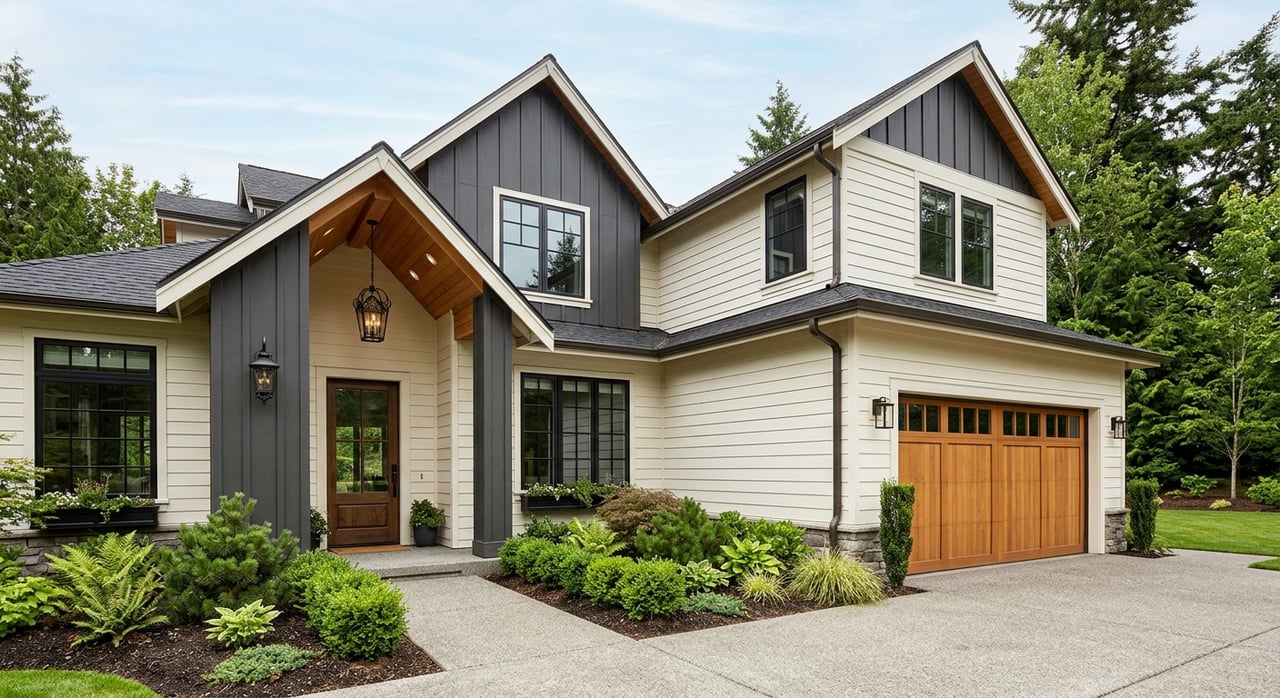
If you want to keep the feel of a standalone home, smaller detached properties may be a strong fit. Some new-home options in Camas include single-level and primary-on-the-main layouts, which can appeal to homeowners who want easier living without giving up privacy.
These homes can help you reduce maintenance while keeping features that matter, like a garage, private entry, or a manageable outdoor space. The tradeoff is that detached homes in Camas may still sit at a price point that requires a thoughtful financial plan.
Townhomes are one of the clearest downsizing paths in Camas right now. Current builder offerings in the area include townhome floor plans from about 1,854 to 2,360 square feet, with pricing starting around $578,000. That supports an important local reality: a downsized home may still be spacious, just easier to maintain.
Attached housing is also part of Camas' near-term pipeline. The city’s middle-housing rules allow more housing types on residential lots, and a recent subdivision notice included both detached and attached single-family homes. If you want more choices over the next few years, this trend is worth watching.
Camas also allows accessory dwelling units, or ADUs, under current city rules. A city page defines an ADU as a small attached or detached housing unit that does not exceed 1,000 square feet. While not every homeowner will want this route, it can matter if your downsizing goals include flexible living arrangements or a simpler footprint.
Your next home is not just about square footage. It is also about how you want to spend your time. In Camas, that often means looking for a home that gives you easier access to parks, trails, and everyday errands while reducing the work that comes with a large lot.
The city oversees 14 parks, more than 22 miles of trails, and nearly 1,250 acres of park land and open space. Local trail and park resources highlight places like Lacamas Creek Trail, Lacamas Park, Lacamas Creek Park, and the Heritage Trail along Lacamas Lake. For many downsizers, that makes a lower-maintenance home near outdoor amenities especially appealing.
Before you choose your next home, think about how you want daily life to feel:
A good downsizing move should support your routine, not just your balance sheet.
One of the biggest downsizing mistakes is focusing only on the sale price or purchase price. Your monthly and upfront costs may change in ways that are not obvious at first. A smaller home can still come with a different cost structure.
Ongoing ownership costs can include your mortgage payment, property taxes, insurance, HOA dues, maintenance, and utilities. In some low-maintenance communities, HOA dues may cover services that you used to handle yourself, such as exterior upkeep. That can be a worthwhile trade if convenience is a top goal.
As you build your budget, make room for:
Closing costs on a home purchase typically run about 2% to 5% of the purchase price, not including the down payment. That range can make a real difference when you are moving within a market like Camas.
If you are selling a home in Camas, you should also account for real estate excise tax. Clark County materials state that sales of real property are subject to a total REET of 1.78%, with 1.28% state and 0.5% local, and the state rate sheet lists Camas at that 0.5% local rate effective March 1, 2026.
That cost matters when you estimate your net proceeds. If your downsizing plan depends on using sale proceeds for the next purchase, getting your numbers right early can help you avoid last-minute stress.
This is one of the biggest downsizing questions, and the answer depends on your finances, your risk tolerance, and the local inventory you are considering. In general, homeowners often try to sell their current home before buying another one. That can reduce the pressure of carrying two homes at once.
Selling first can give you a clear budget for your next purchase. You know your proceeds, you know your timeline more clearly, and you may feel more confident making an offer. The downside is that you may need a temporary place to stay if the right next home is not available right away.
In some cases, buying first can help you secure the right next home before it disappears. This can be appealing if you have very specific needs, such as a single-level layout or a certain part of Camas. But it also raises the stakes.
Bridge or swing loans are one option when sale proceeds have not arrived yet. Fannie Mae guidance says these loans can be used if the lender documents that the borrower can carry the current home, the new home, and the bridge loan, and the bridge loan cannot be cross-collateralized against the new property. In practical terms, bridge financing can solve a timing problem, but it adds carrying risk and underwriting complexity.
If your sale and purchase dates do not line up, renting for a short period may be the cleanest solution. That can take pressure off your purchase timeline and give you time to choose carefully instead of rushing.
Camas does have local bridge options. The Terrace at River Oaks describes itself as age-restricted housing for adults 55+, and Thrive at Green Mountain offers townhome rentals in Camas. For some downsizers, a temporary rental can make the overall move smoother and more flexible.
A successful move usually starts before your home hits the market. If you prepare early, you can compare your options with less stress and make decisions from a position of clarity.
Start with the features you truly need. Think about layout, location, upkeep, storage, and how long you want the home to work for you. This helps narrow your search and keeps you from paying for space you no longer want.
Look at your likely sale price, mortgage payoff, seller costs, and REET. That gives you a working number for your next purchase. A realistic net sheet is one of the most useful tools in any downsizing decision.
Do not stop at list price. Compare taxes, insurance, utilities, maintenance, and HOA dues. Sometimes the best downsizing move is the one with the simplest monthly rhythm, not just the lowest sticker price.
If maximizing proceeds is part of your plan, presentation matters. Thoughtful preparation, decluttering, and staging can help your current home appeal to buyers and support a stronger result.
Decide whether you want to sell first, buy first, or use a rental bridge. Each option has tradeoffs. The best path is the one that fits your finances and comfort level.
Downsizing in Camas can be a smart move if your current home no longer matches the way you want to live. The best next home may be a smaller detached house, a townhome, or another lower-maintenance option that keeps you connected to the Camas lifestyle you already enjoy.
What matters most is choosing with clear eyes. When you understand local inventory, full carrying costs, and the timing of your sale and purchase, you can move with confidence instead of guesswork.
If you are thinking about downsizing in Camas, Debra Penton-Clark can help you evaluate your home’s likely sale value, prepare it for market, and build a plan for your next move with less stress and more clarity.

Market Report
This week the median list price for Washougal, WA 98671 is $875,000 with the market action index hovering around 32.

Market Report
This week the median list price for Vancouver, WA is $624,900 with the market action index hovering around 42.
Market Report
This week the median list price for Clark County, WA is $716,000 with the market action index hovering around 39.
Market Report
This week the median list price for Camas, WA 98607 is $1,009,950 with the market action index hovering around 34.
If you are thinking about buying or selling a property in Washington or Oregon, you need a Realtor that knows the market. You will be my absolute focus. I will work with you every step of the way. First property or moving to your forever home, I will make the process simple, efficient and tailored to your wishes.