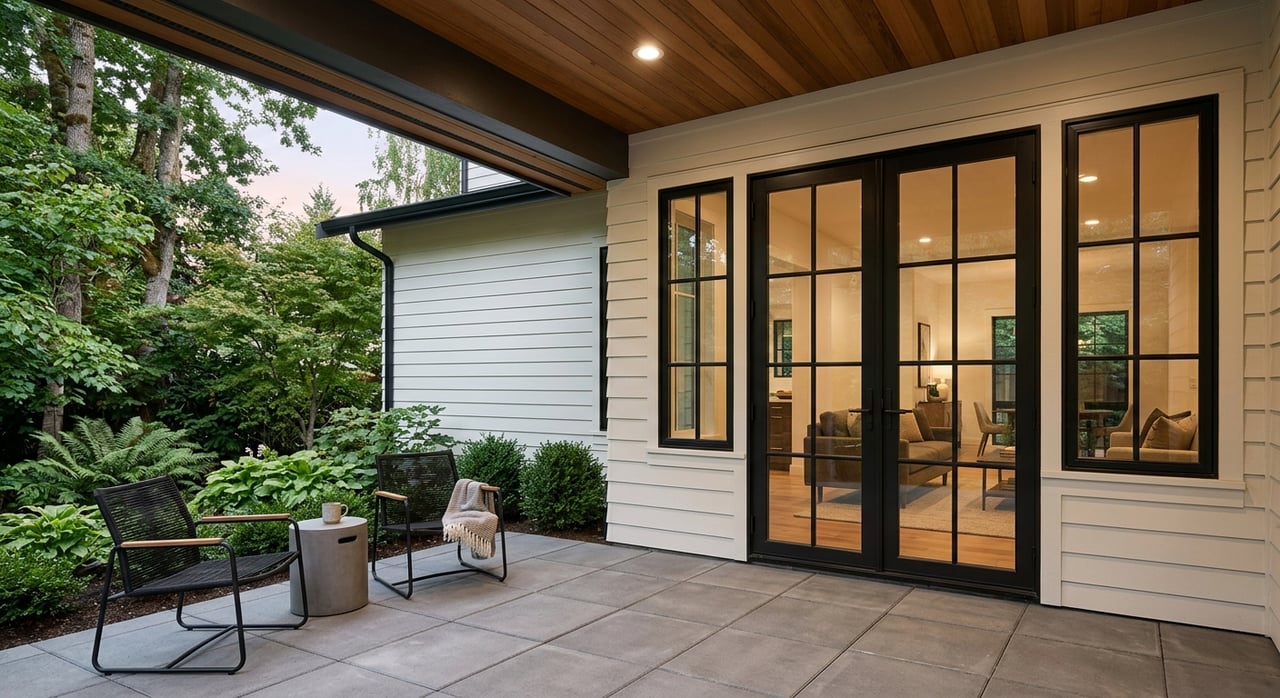
Camas vs. Washougal Comparison for Columbia River Buyers
If you are choosing between Camas and Washougal, you are not really picking between two completely different lifestyles. You are comparing two neighboring Columbia River communities that share a lot, but feel a little different once you look at housing, parks, downtown character, and commute patterns. This guide will help you sort through those differences so you can focus on what matters most to you. Let’s dive in.
Camas and Washougal are closely connected by State Route 14, which serves as a major commute and economic corridor in the Vancouver region. That close link is one reason many buyers compare them side by side rather than treating them as separate worlds.
They also share a strong river-community setting with meaningful access to open space. Camas reports 946 acres and 26 miles of shoreline within the city and urban growth area, while Washougal says it owns and operates 14 parks, one community garden, and several acres of open space, with additional Columbia River parks operated by Clark County and the Port of Camas-Washougal.
For most buyers, the overlap is important. Both communities still have a strong single-family housing base, both offer outdoor recreation, and both are evolving rather than standing still.
Camas describes itself as a city where most development is still made up of single-family homes mixed with forested green space. That can translate into a more established residential feel in many parts of town, especially for buyers who want a detached home setting.
Camas has also already adopted middle-housing and accessory dwelling unit rules. Those 2025 rules allow housing types such as duplexes, triplexes, townhomes, cottage housing, and ADUs, which gives the city a clearer framework for adding housing choice.
Washougal is also heavily single-family today. According to the city’s draft 2025 to 2045 housing element, Washougal had 6,655 housing units in 2023, with nearly 80 percent single-family dwellings and 16 percent multifamily units.
That same planning document points to a need for more variety in housing types and price ranges. It notes a surplus of larger, more expensive housing types and a deficit of smaller, more affordable options, which suggests the city is actively thinking about how to broaden its housing mix over time.
If you are house hunting right now, the practical difference is subtle but real. Camas may feel a bit more settled in how its housing mix is defined, while Washougal may feel more like a market in transition as new planning priorities take shape.
That does not mean one is better than the other. It simply means your experience may come down to whether you want a more established neighborhood pattern or a community that is still expanding its range of home types.
If your daily routine includes driving west toward Vancouver or the I-205 corridor, SR 14 will likely matter as much as the home itself. WSDOT identifies SR 14 as a key commute and economic route, and the corridor has seen increased delay compared with 2019.
For Camas, WSDOT reports that the seven-mile trip to the I-205 interchange averaged 10 minutes during the 2023 peak morning commute. The return trip back toward Camas averaged 8 minutes during the peak evening commute.
Washougal uses the same route, but farther east the road conditions become more sensitive. WSDOT notes that SR 14 narrows to two lanes on the eastern bridge over Camas Slough within Washougal city limits, and that the corridor includes one signalized intersection and turning-conflict issues at Washougal intersections.
WSDOT also says the West Camas Slough Bridge carries about 30,000 vehicles a day and is scheduled for a 2026 repaving project with nightly lane closures and possible weekend detours through Camas. For buyers, that is a reminder that traffic experience is not just about distance on a map.
In practice, commute ease is usually less about choosing Camas or Washougal in the abstract. It is more about where you live within each city, what time you leave, which direction you travel, and how much tolerance you have for bottlenecks or construction impacts.
That is why two homes just a few miles apart can feel very different in day-to-day life. When you compare options, it helps to think beyond city limits and focus on your likely route.
Camas presents itself as the more trail-dense and park-heavy of the two communities. The city says it has 16 developed parks, three indoor recreation and community gathering facilities, 12 miles of city trails, and more than 1,060 acres of parks and open space.
City materials also point to a vibrant downtown, First Friday events, a summer farmers market, Lacamas Lake, and surrounding trails. If you want easy access to trails and a more established network of parks and public spaces, Camas may stand out.
Washougal’s outdoor identity is more closely tied to the Columbia River. The city highlights Waterfront Park and Trail, which includes a 12-foot-wide trail that runs just under a mile, plus a non-motorized kayak and canoe launch, viewpoints, and water access paths.
That riverfront focus is paired with visible civic investment. Washougal’s towncenter revitalization project includes a splash pad, dog park, pocket park, outdoor gathering areas, and improved access to nearby businesses, the library, and the community center.
A simple way to think about it is this: Camas tends to feel more established and amenity-rich, while Washougal feels more riverfront-centered and visibly in a build-out phase around its towncenter. For some buyers, that difference matters a lot. For others, it is simply a matter of personal style.
Camas is often associated with a historic downtown setting and a more finished neighborhood texture. That can appeal to buyers who want a community that already feels built out in many visible ways, with public spaces, trails, and downtown events all working together.
Washougal tells more of a reinvestment story. Its strategic plan describes the city as a safe, vibrant, friendly community that aims to balance growth and economic opportunity while preserving natural beauty and small-town living.
For buyers, that may translate into a sense that Washougal is actively shaping what comes next. If that energy appeals to you, it can be a meaningful plus.
Many buyers find that the final choice is not just Camas versus Washougal. It is one neighborhood pocket versus another, one lot versus another, and one commute pattern versus another.
That is especially true because both communities still share so much: single-family homes, access to open space, and a close connection along SR 14. Your best fit usually comes from matching your daily routine and housing preferences to a very specific part of town.
If you are trying to decide between the two, walking the neighborhood, driving your likely commute, and comparing the style of parks and public spaces can tell you more than a broad city label ever will. And if you are selling in either community, understanding these small but important differences can help position your home more effectively for buyers.
If you want help comparing neighborhoods in Camas and Washougal or preparing a home for sale with thoughtful presentation and local market insight, connect with Debra Penton-Clark.
Market Report
This week the median list price for Washougal, WA 98671 is $875,000 with the market action index hovering around 32.
Market Report
This week the median list price for Vancouver, WA is $624,900 with the market action index hovering around 42.
Market Report
This week the median list price for Clark County, WA is $716,000 with the market action index hovering around 39.
Market Report
This week the median list price for Camas, WA 98607 is $1,009,950 with the market action index hovering around 34.
If you are thinking about buying or selling a property in Washington or Oregon, you need a Realtor that knows the market. You will be my absolute focus. I will work with you every step of the way. First property or moving to your forever home, I will make the process simple, efficient and tailored to your wishes.